

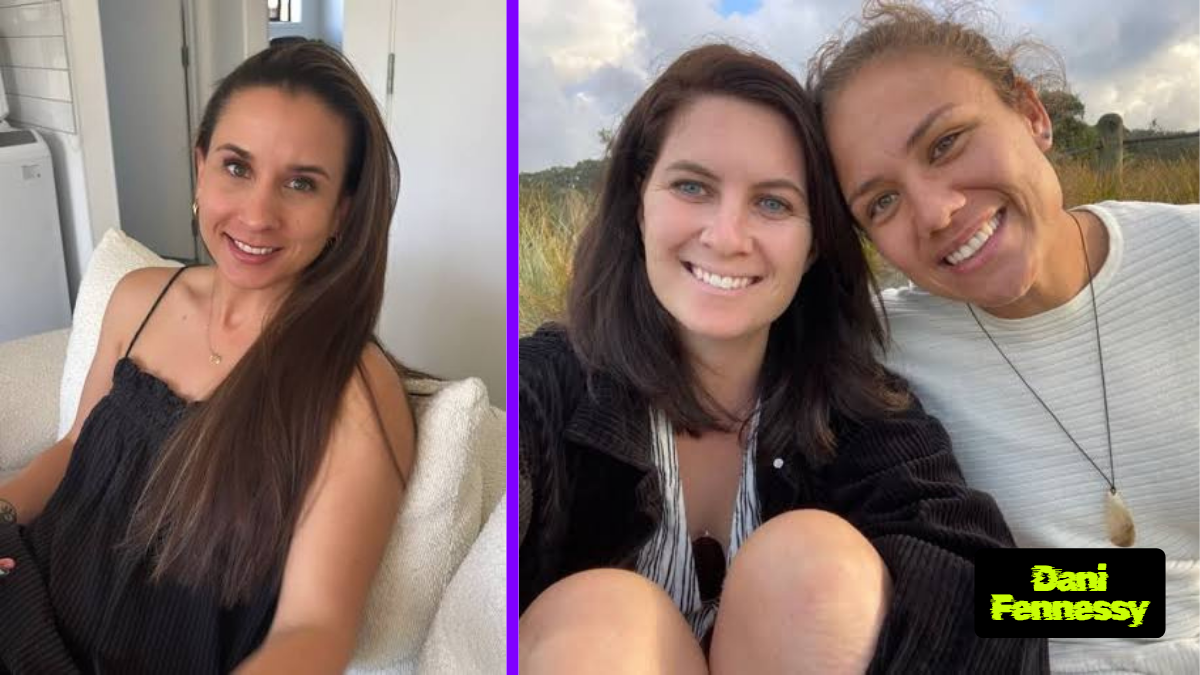
Dani Fennessy is a New Zealand media personality whose career spans radio broadcasting, event hosting, storytelling, and wellness advocacy. Known for her engaging communication style and ability to connect with audiences, she has built a professional identity that extends beyond the microphone. Her journey reflects the changing nature of a media career, where experience in broadcasting can open doors to public speaking, community building, and personal development.
For people discovering Dani Fennessy for the first time, her story offers more than a look at a familiar media personality. It is also a story about navigating personal challenges, rediscovering professional purpose, and using lived experience to encourage others. Her public work has included radio, presenting, hosting events, and speaking about resilience and wellbeing.
Fennessy has also spoken publicly about the challenges that affected her health and working life, including living with idiopathic intracranial hypertension (IIH), a neurological condition that can affect vision. Her experiences have become part of the message she shares with audiences about recovery, self-awareness, and finding a new direction after difficult periods.
Although celebrity profiles often focus on fame, relationships, and personal details, Dani Fennessy’s public story is particularly interesting because of the way her professional life has evolved. From broadcasting in New Zealand to hosting events and advocating for wellness, she represents a more personal, experience-driven side of modern media.
Who Is Dani Fennessy?
Dani Fennessy is a media personality, professional master of ceremonies, storyteller, and wellness advocate from New Zealand. Her professional background includes radio broadcasting, presenting, and public-facing communication, with later work encompassing event hosting and motivational speaking. These roles share a common thread: the ability to communicate clearly, respond to an audience, and make stories feel relatable.
Fennessy’s public profile also reflects an interest in identity, belonging, and personal growth. Rather than concentrating exclusively on entertainment, she has used her platform to discuss experiences that many people can relate to, including difficult transitions, wellbeing, and the process of rebuilding confidence after setbacks.
Her career is a useful example of how media professionals can develop beyond a single job title. Broadcasting can provide the foundation for hosting live events, interviewing guests, facilitating discussions, and delivering keynote presentations. Fennessy’s work illustrates how those communication skills can remain valuable even when a person’s career takes an unexpected turn.
Her Background and Cultural Identity
According to her published professional biography, Fennessy was raised in South Auckland and has Cook Islands and European heritage. Her background forms part of the personal story she has shared in connection with identity, belonging, and finding confidence in who she is.
Cultural identity can influence the way people understand themselves and their place in the world, particularly when they are navigating different expectations or communities. Fennessy has spoken about her journey toward embracing her identity, including her queer identity, as part of the experiences that have shaped her outlook and public advocacy.
Her story should not be reduced to any single aspect of her background. Instead, these experiences provide context for understanding why authenticity, visibility, and connection feature so prominently in the subjects she discusses publicly.
For a media personality whose work relies on connecting with different audiences, that perspective can be particularly meaningful. It helps explain why her professional interests extend beyond entertainment and into conversations about representation, personal development, and wellbeing.
Dani Fennessy’s Career in Radio and Broadcasting
Radio was an important starting point in Fennessy’s professional journey. Her experience behind the microphone helped her develop the communication skills that would later become central to her work as an event host and public speaker. Radio requires more than a confident voice; it also demands quick thinking, curiosity, audience awareness, and the ability to make conversations engaging without relying on visual presentation.
Fennessy has publicly reflected on spending much of her twenties working in radio. In a professional update shared on LinkedIn, she explained how those years taught her to communicate, connect with people, think on her feet, and tell stories that mattered. She also described how her broadcasting experience helped prepare her for the different demands of hosting live events.
These skills are transferable across the media industry. Whether interviewing a guest, introducing a speaker, or guiding a live audience through a programme, a presenter needs to maintain momentum while making people feel comfortable. Fennessy’s experience in radio gave her a foundation for pursuing opportunities that involved more direct interaction with audiences.
Her Experience at Mai FM
Fennessy’s professional biography identifies Mai FM as an important part of her broadcasting career. The New Zealand radio station provided a platform through which she could develop her presenting style and connect with listeners.
Radio audiences often develop a sense of familiarity with presenters because they hear their voices regularly. A successful announcer needs to balance personality with professionalism, creating an atmosphere that feels natural while keeping the programme engaging. These demands help explain why radio experience can be valuable for people who later move into event hosting and public speaking.
Fennessy’s work in broadcasting also contributed to her understanding of storytelling. Good storytelling is not limited to entertainment programmes; it involves listening carefully, recognising what makes an experience meaningful, and communicating it in a way that resonates with others. Those abilities remain evident in the subjects she addresses through her later professional work.
Moving Beyond the Radio Studio
Fennessy’s career has not remained confined to radio. She has also explored television and other presenting opportunities, demonstrating an interest in expanding her skills across different formats. In a LinkedIn post, she reflected on the opportunity to move in front of the camera and host her first television show after years of working behind a microphone.
The move from audio to visual media can be a significant adjustment. Television presenters must consider body language, camera awareness, visual timing, and how their delivery appears on screen. Although radio and television share fundamental communication skills, each medium requires its own approach.
For Fennessy, exploring these different environments reflects a broader interest in storytelling rather than a commitment to just one format. Her career demonstrates how media professionals can build on their existing strengths while remaining open to opportunities that take them in new directions.
Her Work as an Event Host and Master of Ceremonies
One of the most visible parts of Dani Fennessy’s professional profile is her work as a master of ceremonies, commonly known as an MC. An MC helps an event run smoothly, introduces speakers and performers, guides transitions, and keeps an audience engaged throughout the programme.
It may look effortless when an experienced host takes the stage, but the role involves considerable preparation. Hosts need to understand the event’s purpose, know how to introduce participants accurately, and adapt their approach to the audience. They must also be ready to respond when a schedule changes or an unexpected moment interrupts the programme.
Fennessy’s background in radio provides a natural foundation for this work. Both broadcasting and live hosting require clear communication, good timing, and an awareness of how an audience is responding. Her experience across these formats has allowed her to develop a professional identity that reaches beyond traditional radio presenting.
Hosting Events Across New Zealand
Fennessy’s professional profile describes her work hosting events around Aotearoa, the Māori name commonly used for New Zealand. She has discussed how each event presents a different audience and atmosphere, giving her opportunities to meet people from varied backgrounds and learn from their experiences.
Live events also allow hosts to build a connection with an audience in real time. Unlike a recorded programme, an event can change direction depending on audience reactions, the energy in the room, or the circumstances of the day. An effective MC needs to recognise those changes and respond without losing sight of the event’s objectives.
Fennessy’s work has included sporting and corporate settings. A published speaker profile identifies her as a media personality and MC, while professional updates describe her involvement in sporting events and audience-facing presentations. These opportunities demonstrate the range of environments in which communication and storytelling skills can be applied.
Her Connection With Sport and Live Audiences
Sporting events present a particular challenge for hosts because the atmosphere is often energetic, emotional, and unpredictable. Audiences arrive with strong loyalties, and the excitement surrounding a match can become an important part of the event itself. An MC needs to complement that atmosphere while ensuring that interviews, announcements, and other activities remain engaging.
Fennessy’s public professional updates have highlighted her involvement in rugby-related events and football hosting. She has also described hosting a corporate lounge at Eden Park during a Tottenham Hotspur and Auckland FC match, including a question-and-answer session with former footballer Ledley King.
Such work places a presenter in a position to connect sporting figures with fans and other attendees. It also shows how an established skill set can be used across industries that might initially seem separate. A career that begins in radio can lead to opportunities in sport, business, entertainment, and community events.
Dani Fennessy’s Health Journey and Personal Challenges
Another important part of Fennessy’s public story is her experience with health challenges and the effect they had on her professional and personal life. Her published biography describes a period marked by burnout and a diagnosis of idiopathic intracranial hypertension, a condition that can cause increased pressure around the brain and affect vision.
Fennessy has spoken about these experiences as part of her broader message concerning resilience and recovery. Her story highlights how a person’s life can change when health difficulties interfere with established routines, professional ambitions, and their sense of identity. For someone whose career depends on communication and public engagement, changes affecting health can be particularly disruptive.
It is important, however, to distinguish between the experiences Fennessy has chosen to discuss publicly and assumptions about her private life. Her health story is best understood through her own public accounts and professional biography, rather than speculation about details she has not confirmed.
Understanding Idiopathic Intracranial Hypertension
Idiopathic intracranial hypertension, often shortened to IIH, is a medical condition involving elevated pressure around the brain without an identifiable cause in the usual sense of the term. Symptoms can vary, and some people experience headaches, visual disturbances, or other difficulties that require medical assessment and ongoing care.
Fennessy’s published biography states that the condition led to partial vision loss and contributed to an extended period away from work. That information helps explain why her subsequent career story has placed such emphasis on rebuilding, adapting, and finding a new sense of direction.
Health conditions that affect vision can have far-reaching consequences. They may influence daily activities, independence, work arrangements, and emotional wellbeing. The impact varies between individuals, so one person’s experience should not be treated as a universal description of the condition.
By discussing her experience publicly, Fennessy has helped bring attention to a health issue that may be unfamiliar to people who have not encountered it themselves. Her story also demonstrates the value of listening to individuals who describe the realities of living with a condition rather than relying solely on general assumptions about what recovery should look like.
Rebuilding After Burnout
Burnout can be especially difficult for people whose professional identity is closely tied to their work. When a demanding career is interrupted, the challenge may involve more than returning to employment. It can also mean reconsidering priorities, adjusting expectations, and recognising that previous ways of working may no longer be sustainable.
Fennessy’s public speaking profile describes her experience as a journey through burnout, illness, and rebuilding. Rather than presenting recovery as a simple or immediate transformation, her professional story acknowledges the complexity of navigating several difficult circumstances at once.
Her later work in speaking and wellness suggests that these experiences have influenced the subjects she wants to explore with others. She has used her professional platform to discuss resilience, self-awareness, and the importance of connection during difficult periods.
For audiences who have experienced their own setbacks, this perspective can feel relatable. A meaningful recovery story does not need to suggest that every problem has disappeared. It can instead show how people gradually reconsider their circumstances and discover new ways to participate in the parts of life that matter to them.
Wellness Advocacy and the Sol Society Project
Fennessy’s interests have also expanded into wellness and community building. Her public professional profile connects her with Sol Society, a women’s wellness initiative developed with her partner. The project grew from an interest in creating opportunities for women to connect through movement, shared experiences, and supportive social environments.
The idea behind a community-based wellness initiative is straightforward: wellbeing is not necessarily something people have to pursue alone. Shared activities can give participants opportunities to build friendships, develop healthy routines, and feel more connected to others. For people who have experienced isolation or significant life changes, that sense of community can be particularly valuable.
Sol Society represents an extension of Fennessy’s wider interest in human connection. While her earlier work focused on communicating with listeners and event audiences, community projects allow her to participate in creating spaces where people can connect more directly.
What Is Sol Society?
According to Fennessy’s public professional updates, Sol Society was inspired by a trip to the Gold Coast, where she and her partner noticed groups of women walking, moving, laughing, and spending time together. They wanted to create a similar environment that would encourage women to connect through wellness activities.
The project has included activities such as beach Pilates, group walks, events, and workshops. Fennessy has also described plans involving wellness resources and opportunities for women to learn from one another. These activities suggest a broad approach to wellbeing that includes social interaction alongside movement and practical support.
What makes this project interesting in the context of her career is the emphasis on participation rather than performance. Radio and event hosting place a presenter in front of an audience, whereas a wellness community aims to help people build relationships with one another. Both approaches, however, rely on creating an environment where people feel welcome and included.
Sol Society also illustrates how personal experiences can influence professional interests. Fennessy’s public accounts of health challenges and recovery provide context for her interest in wellbeing, although her project should be understood on its own terms rather than as a substitute for medical care.
Dani Fennessy as a Motivational Speaker
Public speaking has become another important part of Fennessy’s professional identity. Her experience as a broadcaster and MC has given her opportunities to communicate with audiences, while her personal experiences have provided subjects for presentations about resilience, health, and personal development.
A keynote presentation differs from conventional event hosting. An MC guides a programme, while a keynote speaker generally develops a central message and invites the audience to reflect on a particular subject. This requires a different kind of preparation, including structuring a personal story, identifying useful lessons, and presenting difficult experiences in a way that respects the audience.
Fennessy’s professional profile identifies storytelling, resilience, identity, and recovery among the subjects she addresses. Her experience illustrates how public speaking can become a way to combine professional communication skills with a more personal message. Her career demonstrates how a background in broadcasting can support a new direction in motivational speaking.
Sharing Personal Experiences With Purpose
In a public LinkedIn update, Fennessy reflected on delivering her first keynote presentation at a conference associated with the Royal Australian and New Zealand College of Ophthalmologists. She described speaking about her experience with IIH and the process of rebuilding her life after difficult years.
Sharing personal experiences in a professional setting requires care. A speaker must decide which details to disclose, how to communicate the emotional reality of an experience, and how to ensure that the presentation offers something useful to the audience. Personal storytelling can create a sense of connection, particularly when it acknowledges uncertainty rather than presenting life as a series of easy victories.
Fennessy’s focus on these themes connects her health journey with her work in media. Her background gives her experience in delivering a message, while her personal perspective informs the subject matter. Together, these elements create a professional direction that differs from a conventional entertainment career.
What Is Known About Dani Fennessy’s Personal Life?
Interest in Dani Fennessy extends beyond her professional achievements, but there is a distinction between information she has shared publicly and details that remain private. Her published biography provides some context about her background and identity, while her professional updates discuss her partner and their shared involvement in Sol Society.
Beyond these public details, readers should be cautious about unverified claims concerning her relationships, family circumstances, or finances. A lack of reliable public information does not mean that a particular rumour is true, nor does it justify filling gaps in a biography with assumptions.
For a responsible celebrity profile, it is more useful to focus on the information that helps readers understand a person’s work, values, and public contributions. In Fennessy’s case, her career development, health advocacy, and community initiatives provide a substantial picture without requiring speculation about her private affairs.
Her Approach to Authenticity and Connection
Authenticity is a recurring theme in Fennessy’s public work. Her professional profile emphasises visibility, identity, storytelling, and the importance of helping people feel seen. Those themes connect her broadcasting experience with her later interest in wellness and motivational speaking.
For someone who has spent years communicating with audiences, authenticity is more than a personal quality; it can also be an important professional skill. People often respond to speakers who communicate with warmth, acknowledge the complexity of their experiences, and avoid pretending that every challenge has a simple solution.
Fennessy’s public career suggests that communication can serve different purposes at different stages of life. It can entertain listeners, bring people together at events, explain unfamiliar experiences, or encourage an audience to think differently about its own challenges.
Conclusion: Why Dani Fennessy’s Story Is Worth Knowing
Dani Fennessy’s journey offers an interesting perspective on life in the New Zealand media industry. Her experience in radio, transition into event hosting, and growing involvement in public speaking demonstrate how communication skills can support a career that evolves over time.
Her story also extends beyond professional milestones. By speaking publicly about IIH, burnout, identity, and recovery, she has brought personal experiences into conversations about resilience and wellbeing. Her involvement with Sol Society further reflects an interest in creating opportunities for connection and community.
Although not every detail of her life is publicly documented, the available information presents a picture of a media professional whose work has developed in response to both opportunities and challenges. For readers searching for Dani Fennessy, the most compelling part of her story is not simply her career history, but how she has continued to explore new ways to communicate, connect with people, and make her experiences meaningful to others.
As her work across media, events, and wellness continues to develop, Fennessy remains an interesting example of how a professional identity can grow beyond its original boundaries.
You May Also Read:Ruby Tui: The Inspiring Journey of a Rugby Star Who Won Hearts Beyond the Field
For more visit usaradar.co.uk
