

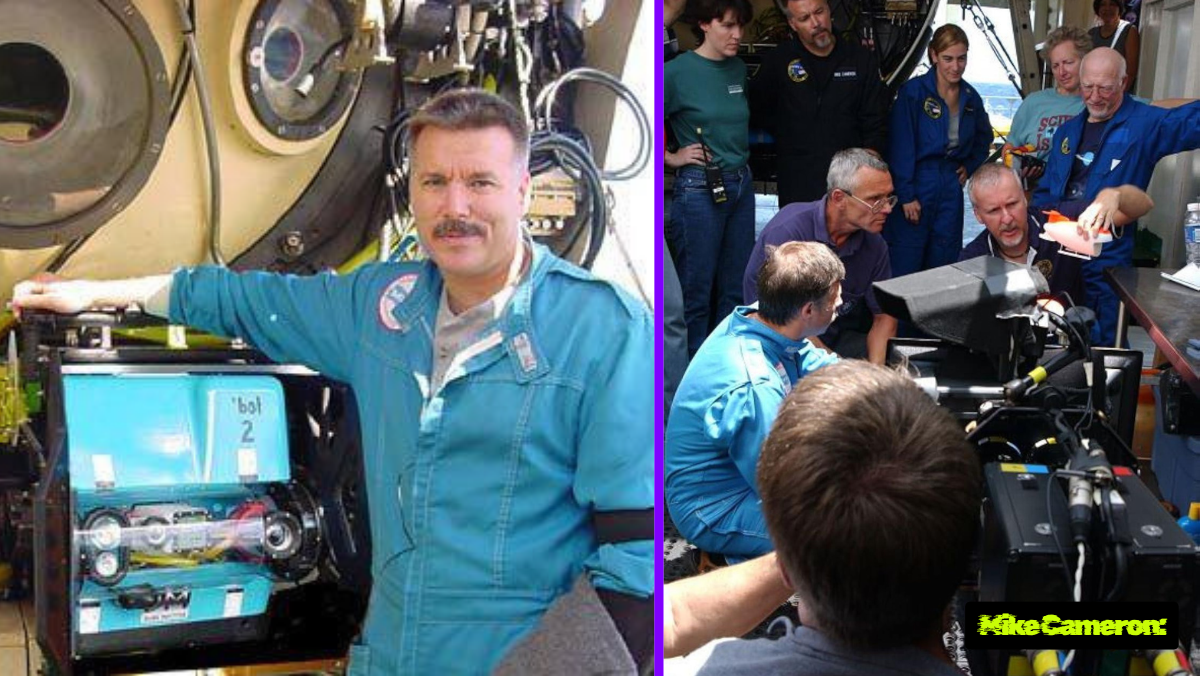
This article focuses on Mike Cameron, the film-industry professional identified in entertainment biographies as a younger brother of filmmaker James Cameron—not the former Major League Baseball player with the same name.
When people hear the surname Cameron in connection with Hollywood, they often think of James Cameron, the filmmaker behind Titanic, The Terminator, and Avatar. Yet the family story includes relatives whose work has taken place far from the spotlight. One of the names that attracts curiosity is Mike Cameron, a comparatively private figure whose professional credits connect him to several film productions.
Mike Cameron is not widely profiled in the way his famous brother is. Publicly available biographical information is limited, and much of what appears online comes from entertainment database entries rather than extensive interviews or detailed first-person accounts. Those records associate him with films including The Abyss, The Negotiator, and Virus, as well as a technical contribution to the deep-sea filming work connected with Titanic.
That combination makes Mike Cameron an interesting subject for film fans. His story offers a look at the less visible technical side of filmmaking, where specialist equipment and practical problem-solving can help make ambitious productions possible. It also highlights an important point: being related to a famous director does not necessarily mean living a celebrity lifestyle.
Who Is Mike Cameron?
Mike Cameron is a film-industry technical specialist and engineer whose work has been associated with underwater filming, camera systems, and remote-operated vehicles. He is identified in entertainment biographies as the younger brother of James Cameron, although his professional identity is quite different from that of the celebrated director. Rather than becoming a familiar on-screen personality, Mike developed expertise in equipment and engineering for demanding film projects. IMDb+1
One of the strongest public records of his professional work comes from a 2002 event listing published by the California Institute of Technology. It identifies Mike Cameron as the chief executive officer of Dark Matter LLC and describes a presentation about deep-ocean remotely operated vehicles used during expeditions to the Titanic and Bismarck shipwrecks. The listing makes clear that his work extended beyond conventional movie production into the practical challenges of underwater exploration. California Institute of Technology
His career is an interesting example of how technical creativity can become part of the filmmaking process. A director may imagine a particular shot, but capturing it can require new equipment, custom engineering, and solutions that do not yet exist. Mike Cameron’s work helped address some of those challenges, especially when cameras and robotic vehicles had to operate under the extreme pressure of the deep ocean.
Is Mike Cameron Related to James Cameron?
Yes. Entertainment biographies identify Mike Cameron as James Cameron’s younger brother. The relationship is also discussed in reporting about the brothers’ technical collaboration, particularly their work on underwater camera and vehicle systems. IMDb+1
James Cameron became internationally famous through films such as The Terminator, Aliens, The Abyss, and Titanic. His reputation grew through a combination of ambitious storytelling and an interest in pushing the technical boundaries of cinema. Mike’s work complemented that creative ambition by focusing on the engineering challenges behind some of the director’s most demanding ideas.
Their professional connection is more interesting than a simple celebrity-family association. The brothers were linked by practical collaboration: James could identify the visual or filming problem, while Mike brought engineering knowledge to the task of developing equipment that could help solve it. A published profile of James Cameron’s career describes this working relationship and the brothers’ development of specialized film technology. Cinephilia & Beyond
Mike Cameron’s Work Behind the Camera
Mike Cameron’s professional credits include work in the camera and electrical department, stunts, and additional crew. IMDb lists titles such as The Abyss (1989), Strange Days (1995), The Negotiator (1998), and Virus (1999) among the productions associated with his career. These credits show that his involvement in entertainment was not limited to one underwater project. IMDb
The different departments listed in film credits can involve very different responsibilities. Camera and electrical teams help operate and support the equipment used to capture a production, while stunt work involves carefully planned physical action performed under controlled conditions. Additional-crew credits can cover specialist contributions that do not fit neatly into the most familiar filmmaking categories. The exact task performed on each production should be judged from its specific credit rather than assumed from the title alone.
For Mike Cameron, the wider pattern is one of technical and practical involvement. His name is associated with productions that demanded specialized equipment, physical coordination, or unusual filming conditions. This is a less visible side of filmmaking, but it is essential to the process of turning a director’s plans into footage that audiences can eventually see.
His Connection to The Abyss
The Abyss, released in 1989, is one of the most important titles in the Cameron family’s film story. Directed by James Cameron, the science-fiction film follows an underwater team investigating a mysterious phenomenon in the ocean. Its production became known for the practical challenges of filming in large water tanks and creating convincing underwater sequences.
Mike Cameron is listed among the additional crew associated with the film. A retrospective article about James Cameron’s career also describes the brothers’ collaboration on technical equipment for underwater filming, including a diver propulsion vehicle designed to help move cameras without relying on conventional underwater cranes and tracks. IMDb+1
The significance of this work is easier to understand when considering the conditions involved. Underwater filming can limit movement, visibility, communication, and access to equipment. A camera system that works perfectly on a conventional soundstage may be impractical beneath the surface. Custom-designed tools can therefore make the difference between an idea that remains on paper and a shot that can actually be filmed.
Other Film Credits
Mike Cameron is also associated with Strange Days, The Negotiator, and Virus. IMDb lists him in different production categories across these projects, including camera and electrical work and stunts. These records help establish his broader connection to the film industry, although they do not provide a complete account of his day-to-day responsibilities on every set. IMDb
The variety of these credits is a reminder that film careers are not always defined by a single job title. A specialist may contribute in different ways depending on the needs of a production, their technical skills, and the demands of a particular scene. Mike Cameron’s public filmography reflects that range, even if detailed descriptions of each assignment are not readily available.
For readers discovering his name through James Cameron, these projects offer a useful starting point. They show that Mike had his own professional involvement in the entertainment business, rather than simply appearing in biographies because of his family relationship. At the same time, it is important not to confuse a credit listing with evidence of a leading creative role.
Mike Cameron and the Deep-Sea Engineering Behind Titanic
Perhaps the most distinctive part of Mike Cameron’s professional story is his work on underwater technology connected with the exploration of the Titanic. The 2002 Caltech event listing describes him as the CEO of Dark Matter LLC and identifies his presentation as focusing on deep-ocean remotely operated vehicles used during expeditions to the Titanic and Bismarck. California Institute of Technology
The wreck of the Titanic lies thousands of metres below the ocean surface, where water pressure creates extraordinary engineering challenges. Equipment used at that depth must be designed to withstand conditions that would quickly destroy ordinary cameras and machinery. Capturing clear footage also requires careful planning around lighting, movement, power, communications, and the limited space available inside or around underwater vehicles.
Mike Cameron’s work addressed these practical problems through specialized camera housings and robotic systems. A technical article about the making of Ghosts of the Abyss explains that his company, Dark Matter LLC, developed remotely operated vehicles with onboard batteries and fibre-optic communication systems. These designs gave the vehicles greater freedom to explore the wreck than conventional tethered systems could offer. Computer Graphics World
The Camera Housing for Deep-Ocean Filming
A camera housing is not simply a protective case. At extreme depths, it must withstand enormous external pressure while keeping delicate optical and electronic equipment safe. It also needs to allow the camera to capture usable images without introducing distortion or restricting the movement required for filming.
A retrospective account of the Ghosts of the Abyss expedition describes Mike Cameron’s work on a new titanium housing for a twin-camera system. The design included a specialized optical dome and a mechanism intended to support camera movement. The article explains that the equipment was developed to help the team capture stereoscopic images in an environment where conventional camera arrangements were not suitable. rossanthony.com+1
The engineering challenge was significant because the system had to function reliably at the depth of the wreck. Failure was not simply a matter of losing a camera; pressure-related damage could destroy expensive equipment and create serious risks during an expedition. The housing therefore needed to be designed around safety, reliability, and the specific demands of deep-water operation.
Remote-Operated Vehicles and the Titanic Expedition
The remotely operated vehicles associated with Dark Matter LLC were another major part of the work. These machines could be sent into areas of the wreck that were difficult for human divers or larger submersibles to reach. Their small size and onboard power systems helped the expedition explore confined spaces and record images from inside the ship. Computer Graphics World
The technical article in Computer Graphics World describes the vehicles as being designed with high-density batteries and fibre-optic links. This approach reduced the need for a heavy power tether and allowed the ROVs to move more freely through the wreck. The vehicles were also equipped with cameras and lighting systems so that the team could record areas that had remained largely inaccessible. Computer Graphics World
This work is a major reason Mike Cameron’s name remains connected to the Titanic story. His contribution was not simply about making a movie camera waterproof. It involved designing and integrating equipment that could help an expedition explore a historic shipwreck while producing footage for a documentary audience. That combination of engineering and visual storytelling makes his career unusual within the wider film industry.
Dark Matter LLC: Mike Cameron’s Engineering Company
Dark Matter LLC was the company associated with Mike Cameron’s deep-sea engineering and design work. A 2002 Caltech event announcement identified him as its CEO and described the company’s involvement in technology developed for underwater exploration. This provides a more substantial picture of his professional identity than the brief film credits alone. California Institute of Technology
The company’s work focused on specialized equipment for difficult underwater environments. Its projects included camera systems and remotely operated vehicles designed to capture images of deep-sea locations. These were not ordinary consumer products or standard film accessories. They required engineering solutions tailored to the pressure, limited visibility, and practical restrictions of deep-ocean exploration.
Dark Matter LLC also illustrates how filmmaking technology can overlap with scientific and exploratory engineering. The same equipment that helps a documentary crew capture remarkable images can also provide researchers and expedition teams with new ways to observe places that are otherwise difficult to reach. In this sense, Mike Cameron’s work sat at the intersection of entertainment, engineering, and exploration.
A Presentation at Caltech
In August 2002, Mike Cameron was scheduled to speak at the California Institute of Technology’s Jet Propulsion Laboratory. The event was titled Deep Ocean ROVs at Titanic and Bismarck: Harbingers for Icy Moons and Extraterrestrial Oceans? Its description said he would discuss the technology, team, and resources involved in capturing close-up footage of the two historic shipwrecks. California Institute of Technology
The subject of the presentation is revealing. The event connected deep-sea exploration with the possibility of studying oceans beyond Earth. Technologies developed to operate in the extreme conditions of the deep ocean could potentially inform future exploration of icy moons and other environments where liquid water might exist beneath a frozen surface.
That connection gives Mike Cameron’s engineering work a wider context. His professional interests were not limited to helping a Hollywood production achieve an impressive shot. The equipment and experience associated with his company were relevant to broader questions about how humans can explore places that are difficult or dangerous to reach.
Mike Cameron’s Personal Life and Family Background
Although Mike Cameron’s professional work has attracted interest because of its connection to James Cameron, reliable information about his private life is much more limited. IMDb’s biographical entry identifies him as James Cameron’s younger brother and lists Shirley Lowe among the family information associated with his profile. It also includes a previous marriage to Lucy Trujillo, but detailed independent biographical information about the relationship is not readily available. IMDb
There is not enough dependable public information to provide a complete account of Mike’s childhood, education, current family circumstances, or personal interests. It would be inaccurate to fill those gaps with assumptions based on his brother’s life or career. A responsible profile should keep the focus on the details that can be supported.
This limited public record also helps explain why Mike Cameron is not as recognizable as other members of the Cameron family. His professional work has largely taken place behind the scenes, and the available sources focus more on engineering projects than on personal publicity. For readers, that means his career is easier to trace than many aspects of his private life.
His Relationship With James Cameron
The relationship between Mike and James Cameron is an important part of the story, but it is not the only thing that defines Mike’s professional identity. Their collaboration brought engineering expertise into productions that demanded ambitious underwater filming techniques. Articles about the making of The Abyss and Ghosts of the Abyss describe Mike’s role in developing specialized equipment for his brother’s projects. rossanthony.com+1
Working with a family member can bring a distinctive dynamic to a creative project. In this case, the collaboration connected James’s interest in capturing challenging images with Mike’s technical ability to design equipment. The available reporting suggests that their relationship included both professional cooperation and the ordinary personal dynamics of siblings, although it does not provide a complete account of their private relationship.
It is best to avoid assuming that every project associated with James Cameron involved Mike or that every technical achievement should be credited to one person. Major productions are collaborative efforts. The evidence supports describing Mike as an important technical contributor to specific underwater projects, not as the sole engineer behind all of his brother’s filmmaking innovations.
Why Mike Cameron’s Work Matters to Film Fans
Film audiences usually experience a finished movie without seeing the engineering that made its most difficult sequences possible. A deep-sea documentary may look effortless on screen, but behind the footage can be years of design, testing, equipment development, and careful coordination. Mike Cameron’s work offers a useful example of this hidden process.
The technology associated with Ghosts of the Abyss demonstrates how specialist engineering can expand the possibilities of documentary filmmaking. Remote-operated vehicles and custom camera systems allowed the expedition to record parts of the Titanic that would have been difficult to capture using conventional equipment. The technical reporting on the project describes how these systems helped the team move through confined spaces and gather stereoscopic images. Computer Graphics World
His story also challenges the idea that every person connected to a famous filmmaker must pursue a career in directing or acting. Mike’s professional path was rooted in engineering and technical problem-solving. Rather than building a public identity around celebrity, he became associated with the machinery and systems that helped make ambitious filming projects possible.
For readers interested in the history of film technology, that is arguably the most compelling part of his profile. His work shows how cinema depends on specialists whose achievements may be less visible than a director’s name but are still essential to the finished production.
Frequently Asked Questions About Mike Cameron
Is Mike Cameron James Cameron’s brother?
Yes. Entertainment biographies identify Mike Cameron as the younger brother of filmmaker James Cameron. Their professional connection is also described in reporting about the development of underwater filming equipment. IMDb+1
What does Mike Cameron do?
Mike Cameron is associated with film production, camera and electrical work, stunts, and deep-sea engineering. He was identified as the CEO of Dark Matter LLC in a 2002 Caltech event announcement about underwater remotely operated vehicles. IMDb+1
Did Mike Cameron work on Titanic?
Mike Cameron is associated with the underwater camera and exploration technology used during deep-sea work connected with the Titanic. Reporting on Ghosts of the Abyss describes his company’s camera housings and remotely operated vehicles. rossanthony.com+1
What is Dark Matter LLC?
Dark Matter LLC was an engineering and design company associated with Mike Cameron. Its work included deep-sea camera systems and remotely operated vehicles developed for underwater exploration. rossanthony.com+1
What movies is Mike Cameron known for?
IMDb lists Mike Cameron in connection with The Abyss (1989), Strange Days (1995), The Negotiator (1998), and Virus (1999), among other projects. His credits span several production categories. IMDb
Is Mike Cameron the baseball player?
There are multiple people named Mike Cameron. This article is about the film-industry professional identified as James Cameron’s younger brother. It is not about Michael Terrance Cameron, the former Major League Baseball center fielder who played for several teams during a 17-year career. IMDb+1
Conclusion
Mike Cameron may not have the worldwide recognition of his brother James, but his professional story is worth exploring in its own right. His work in film production and deep-sea engineering connected him to some unusually demanding projects, including underwater filming associated with The Abyss, Titanic, and Ghosts of the Abyss.
Through Dark Matter LLC, he became involved in developing specialized camera systems and remotely operated vehicles that helped filmmakers and expedition teams explore the deep ocean. The available records do not reveal every detail of his personal life, but they do show a technical professional whose contributions helped bring difficult images within reach.
For anyone curious about the people behind major filmmaking achievements, Mike Cameron represents an especially interesting part of the story: the engineer whose work helped turn ambitious cinematic ideas into practical reality.
Editorial note: Public biographical information about Mike Cameron is limited. This article relies on available film-industry records, technical reporting, and institutional event information. It does not confuse him with the former baseball player of the same name.
You May Also Read: John David Cameron: The Little-Known Story of James Cameron’s Brother and His Connection to Hollywood
For more visit usaradar.co.uk

1 Comment
Pingback: Valerie Cameron: Inside the Career, Film Criticism, and Media Journey of the Utah-Based Entertainment Personality - Usa Radar